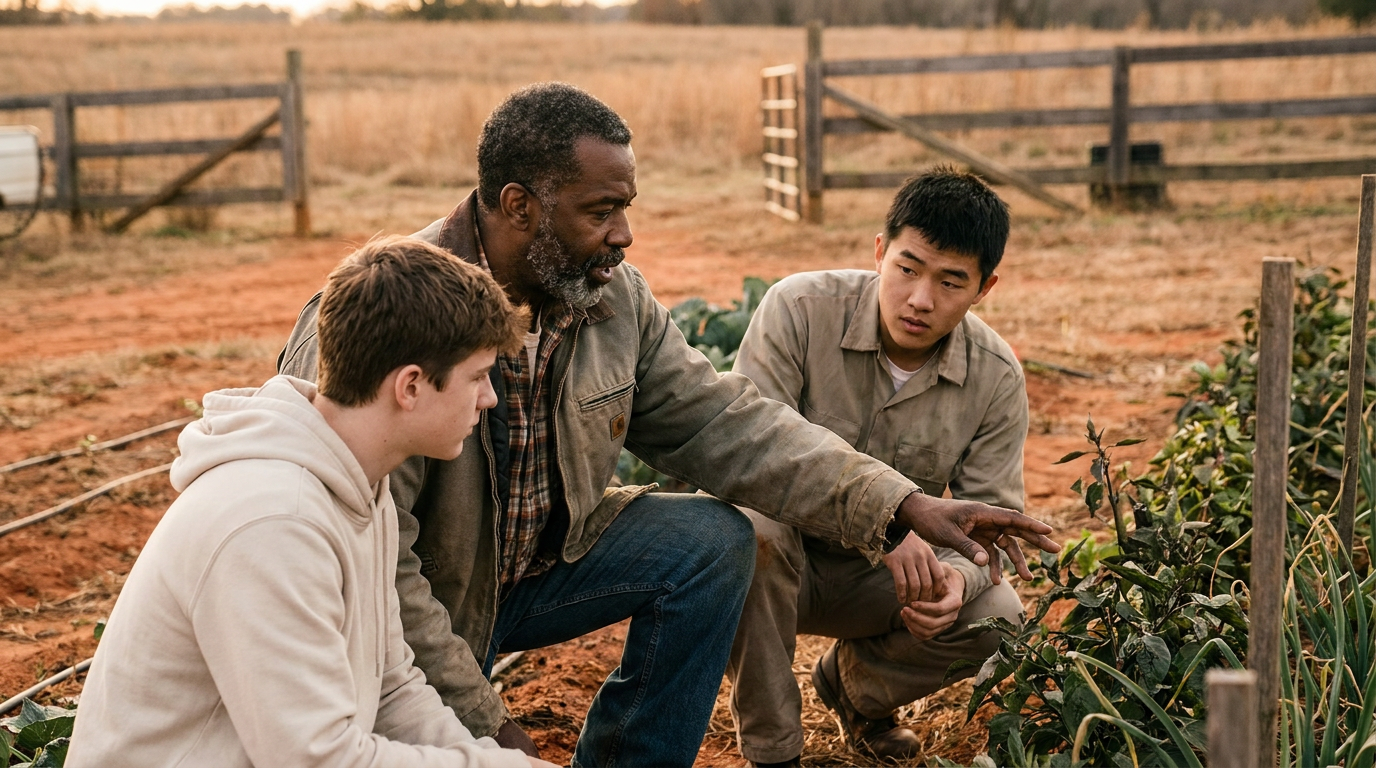
Fatherhood and the Fatherless
Fatherhood and fatherlessness represent two deeply connected realities.
One reveals the responsibility of nurturing life; the other reminds society of the consequences that may arise when essential relationships are lost, fractured, or neglected. The Christian response to fatherlessness must extend beyond sympathy. It must include compassion expressed through responsible action, mentorship, family support, adoption, fostering, advocacy, and the restoration of healthy relationships.The Fatherhood of God provides the spiritual foundation for this responsibility.
Topic - Fatherhood and the Fatherless
INTRODUCTION: WHEN FATHERHOOD EXTENDS BEYOND BIOLOGY
Fatherhood is more than the biological responsibility of bringing a child into the world. It is a divine calling to nurture life, provide direction, establish identity, demonstrate love, and prepare the next generation for purposeful living.
While many children grow up surrounded by the love, protection, and guidance of their fathers, others journey through life with an empty space where a father's presence should have been.
Some have lost their fathers to death. Others have fathers who are physically alive but emotionally unavailable. Some have experienced abandonment, rejection, divorce, family separation, or circumstances that have deprived them of meaningful paternal relationships.
Yet others have never known the identity of their biological fathers.
The experience of fatherlessness is not always defined by the physical absence of a father. Sometimes, the deepest wounds of fatherlessness are experienced by children who live under the same roof as their fathers but remain emotionally disconnected from them.
A father may be physically present but relationally absent. He may provide financial resources without offering emotional security, discipline without affection, and authority without meaningful companionship.
This raises a profound question:
Can a child have a father and still experience fatherlessness?
The answer is yes.
Fatherhood becomes meaningful not merely through biological connection but through intentional relationships characterized by love, responsibility, sacrifice, protection, and consistent presence.
The challenge before every generation of fathers is therefore twofold: to remain faithfully present in the lives of their biological children and to recognize the responsibility of extending compassion, mentorship, and support to children who are growing up without paternal guidance.
A mature father understands that the influence of fatherhood should never be limited to the boundaries of biological relationships.
1. GOD: THE FATHER OF THE FATHERLESS Psalm 68:5
God is described as a Father to the fatherless and a defender of widows.
One of the most remarkable revelations of God's character is His identification with those who have experienced the loss or absence of parental protection.
God does not merely express sympathy for the fatherless. Scripture presents Him as their defender, protector, and source of belonging.
This reveals something fundamental about divine fatherhood: it is not restricted by biological relationships, social structures, or human limitations.
Where earthly fatherhood fails, the love of God remains available.
Where human relationships become fractured, God's compassion continues.
Where abandonment produces loneliness, God's presence offers the possibility of renewed belonging.
The Three Dimensions of God's Fatherhood
1. The Father who protects
God's fatherhood is expressed through His concern for the vulnerable. He calls His people to defend those who lack protection and to confront injustice against them.
2. The Father who restores
God offers hope to those whose experiences of rejection, abandonment, or loss have affected their sense of worth.
3. The Father who establishes belonging
God's love reminds the fatherless that their identity and value are not determined by the absence of an earthly father.
Psalm 27:10 expresses this assurance through David's confidence that even if his father and mother forsook him, the Lord would receive him.
This is a powerful foundation for Christian fatherhood.
A godly father should reflect the heart of a God who notices the forgotten, welcomes the vulnerable, and restores dignity to those who feel abandoned.
2. Understanding the many faces of Fatherlessness
Fatherlessness is not a single experience. It manifests in different ways, and understanding these differences is essential for compassionate fatherhood.
A. Physical Fatherlessness
This occurs when a father is absent because of death, separation, abandonment, migration, incarceration, or other circumstances.
The child may grow up without regular access to paternal affection, guidance, and companionship.
However, the absence of a father does not automatically determine a child's future. Loving mothers, grandparents, extended families, mentors, and supportive communities can provide meaningful stability and guidance.
B. Emotional Fatherlessness
This occurs when a father is physically present but emotionally disconnected.
Such fathers may provide food, shelter, education, and financial resources but struggle to demonstrate affection, listen attentively, or establish emotional intimacy.
Children may consequently feel unseen, unheard, or unimportant.
The tragedy of emotional fatherlessness is that the child may have access to the father without experiencing the relationship.
C. Spiritual Fatherlessness
Spiritual fatherlessness describes the absence of meaningful guidance in faith, moral formation, spiritual discipline, and Christian character.
A child may have material security but lack consistent examples of integrity, humility, compassion, forgiveness, and devotion to God.
Christian fathers are called to demonstrate their faith through both instruction and example.
D. Relational Fatherlessness
This develops when a father's relationship with his child becomes characterized by persistent conflict, rejection, harshness, or emotional distance.
Although the father remains present, the relationship may lack trust and safety.
E. Generational Fatherlessness
Sometimes fatherlessness becomes a recurring family pattern.
A boy who grows up without a healthy paternal example may enter adulthood uncertain about how to express affection, resolve conflict, nurture children, or sustain meaningful relationships.
Without intentional reflection and support, some of these difficulties may influence his own parenting.
However, family history is not destiny.
A man who did not experience healthy fatherhood can still become a loving, responsible, and emotionally available father.
The cycle can be interrupted through personal growth, mentorship, healing, and deliberate commitment.
3. The silent wounds of Fatherlessness
Fatherlessness may create emotional challenges that are not immediately visible.
For some children, the absence of a father raises difficult questions:
Why did my father leave?
Was I not important enough for him to stay?
Who will teach me what it means to become a man?
Who will protect me when life becomes difficult?
Where do I belong?
Such questions may influence a child's developing understanding of relationships, identity, security, and self-worth.
Some children experience grief, anger, loneliness, or uncertainty. Others adapt with remarkable resilience, particularly when surrounded by dependable caregivers and supportive relationships.
It is important not to assume that every fatherless child is emotionally damaged or destined for failure.
Nevertheless, the absence of a desired paternal relationship can represent a significant loss.
The Wound of Rejection
A child may interpret paternal abandonment as evidence of personal inadequacy.
Without reassurance, this interpretation can become deeply rooted.
A compassionate father figure helps the child understand that an adult's absence does not diminish the child's worth.
The Wound of Insecurity
Consistent caregiving contributes to a child's sense of emotional safety.
When important relationships become unpredictable, some children may struggle with trust or fear further abandonment.
The Wound of Identity
Children often develop their identities through relationships, observation, and belonging.
The absence of a father may leave some children with unanswered questions about their family history, heritage, and personal identity.
The Wound of Unresolved Grief
Fatherlessness resulting from death or separation can create grief that resurfaces during important milestones.
Graduation, marriage, childbirth, and other significant events may remind individuals of the father who is absent.
The appropriate response is not judgment but compassion.
The fatherless do not need society to define them by their losses. They need opportunities to experience love, dignity, belonging, and hope.
4. When Fathers are present but children feel abandoned
One of the great challenges of contemporary fatherhood is the possibility of becoming a stranger within one's own household.
A father may be committed to his profession, business, ministry, or personal ambitions while gradually becoming disconnected from his children.
He may assume that providing financial security is sufficient evidence of love.
Yet children need more than provision.
They need attention.
They need affection.
They need reassurance.
They need guidance.
They need to know that their voices matter.
They need fathers who are willing to listen without immediately criticizing and correct without humiliating.
A father's presence should communicate emotional security rather than fear.
The Difference Between Provision and Presence
Provision answers the question:
What can my father give me?
Presence answers a deeper question:
Does my father truly care about me?
Both are important, but material provision cannot fully replace meaningful relationships.
A father who consistently prioritizes achievement over connection may eventually discover that he has successfully provided for a family with whom he has lost emotional intimacy.
The greatest tragedy of fatherhood is not necessarily the inability to provide everything a child desires, but the failure to offer the love and presence a child needs.
5. Joseph - the beauty of fatherhood beyond Biology
Matthew 1:18–25; Matthew 2:13–23
Joseph, the earthly guardian of Jesus Christ, provides a profound biblical example of fatherhood expressed through responsibility rather than biological connection.
Joseph was not the biological father of Jesus.
Nevertheless, he accepted the responsibility of caring for Mary and raising Jesus within his household.
His example reveals several dimensions of mature fatherhood.
A. Fatherhood Requires Acceptance
Joseph accepted a responsibility that challenged his expectations and required faith.
He chose obedience rather than public humiliation or rejection.
This demonstrates that meaningful fatherhood begins with a willingness to accept responsibility.
B. Fatherhood Requires Protection
When Joseph received the warning concerning Herod's intentions, he acted to protect Mary and Jesus.
He demonstrated that fatherhood involves vigilance, courage, and sacrifice.
C. Fatherhood Requires Sacrifice
Joseph's responsibility required significant personal adjustments, including relocation and uncertainty.
He placed the safety of his family above personal convenience.
D. Fatherhood Requires Faithful Presence
Joseph's role reminds us that a man does not need a biological connection to make a lasting contribution to a child's life.
Stepfathers, adoptive fathers, foster fathers, guardians, and mentors can all demonstrate meaningful dimensions of fatherhood.
Joseph teaches us that fatherhood is not defined solely by whose blood flows through a child's veins, but also by whose love, sacrifice, and responsibility help shape that child's life.
6. The Church and the responsibility towards the fatherless James 1:27
James identifies care for orphans and widows in their distress as an important expression of sincere religion.
This places the welfare of vulnerable children within the practical responsibilities of Christian faith.
The Church must therefore understand that its ministry to children cannot be limited to Sunday school instruction or occasional charitable donations.
It should also include meaningful relationships, protection, advocacy, mentorship, and practical assistance.
A. Creating Communities of Belonging
Churches should provide environments where children without fathers experience acceptance rather than stigma.
They should never be made to feel inferior because of their family circumstances.
B. Establishing Responsible Mentorship
Mature Christian men can offer guidance, encouragement, and positive examples of responsible adulthood.
Such mentorship must be transparent, accountable, age-appropriate, and consistent with safeguarding policies.
C. Supporting Widowed and Single Mothers
The responsibility of raising children alone can be demanding.
Church communities can offer practical support, including childcare assistance, educational resources, emotional encouragement, and access to trusted support networks.
This support should honour the authority, dignity, and contributions of the child's primary caregiver.
D. Encouraging Adoption and Fostering
Christian families who have the willingness, preparation, and resources may consider adoption or fostering as meaningful ways to provide care for children who need stable homes.
These decisions require more than good intentions.
They demand patience, emotional maturity, appropriate training, respect for children's histories, and a willingness to provide enduring support.
Fostering and adoption should always prioritize the child's welfare rather than the adult's desire to fulfil a religious or personal ambition.
E. Advocating for Vulnerable Children
The Church should support efforts to protect children from neglect, exploitation, abuse, and discrimination.
A Church that celebrates the Fatherhood of God must also demonstrate practical concern for children who lack dependable parental care.
7. Fatherhood through Adoption and Fostering
Adoption and fostering demonstrate that parental love can extend beyond biological relationships.
Although these forms of caregiving have different legal and practical responsibilities, both can provide opportunities for adults to offer nurturing relationships to children.
Adoption: Creating a Permanent Family Relationship
Adoption establishes a legal parent-child relationship and may offer a child lifelong belonging within a family.
An adoptive father accepts the responsibilities of nurturing, protecting, guiding, and supporting the child.
However, adoption does not erase the child's earlier experiences, biological heritage, or possible feelings of loss.
A wise adoptive father respects the child's history while building a secure relationship rooted in unconditional commitment.
Fostering: Providing Safety and Stability
Fostering involves caring for children who cannot safely remain in their usual home environment for a period of time.
Unlike adoption, fostering is not necessarily permanent.
A foster father's responsibility may include supporting the child's emotional well-being, respecting family connections, and cooperating with professionals and caregivers involved in the child's care.
Where appropriate and safe, family reunification may remain an important goal.
The Heart of a Father Beyond Biology
Whether through adoption or fostering, responsible fatherhood requires:
Love that is not dependent on biological connection. Patience with children who may have experienced adversity. Emotional availability and consistent reassurance. Respect for the child's identity, culture, and family history. Commitment to the child's physical, emotional, educational, and spiritual well-being. Willingness to seek professional support when needed. Protection of the child's dignity and best interests.
A child should never be made to feel indebted for being loved or cared for.
The beauty of fatherhood beyond biology is that it demonstrates how love can become a deliberate commitment rather than merely a natural relationship.
8. Breaking the generational cycle of Fatherlessness Malachi 4:5–6
The prophetic message of Malachi speaks of turning the hearts of fathers toward their children and the hearts of children toward their fathers.
This passage provides a powerful image of relational restoration.
The transformation of fatherhood begins when men recognize that unresolved experiences from childhood can influence their adult relationships.
A man who grew up without paternal affection may struggle to express tenderness.
A man raised under harsh discipline may mistakenly believe that intimidation is the foundation of authority.
A man who experienced abandonment may fear emotional intimacy or commitment.
Yet these patterns can change.
Step One: Acknowledge the Past
Healing begins with recognizing the impact of painful experiences without allowing them to become permanent definitions of identity.
A father must be willing to examine how his upbringing influences his attitudes, reactions, and relationships.
Step Two: Reject Destructive Patterns
A difficult childhood does not justify harmful parenting.
Mature fatherhood requires the deliberate rejection of neglect, emotional abuse, violence, humiliation, and irresponsible behaviour.
Step Three: Develop Emotional Maturity
A father must learn to manage anger, communicate respectfully, listen patiently, and respond to conflict without intimidation.
Step Four: Seek Healthy Mentorship
Men who lacked positive paternal examples can learn from responsible fathers, trusted mentors, counsellors, and supportive communities.
Step Five: Establish New Family Traditions
Healthy patterns can be built through consistent affection, shared activities, honest communication, prayer, and meaningful family rituals.
Step Six: Practise Reconciliation Where Safe
Some fractured relationships can be restored through acknowledgment, repentance, accountability, and sustained behavioural change.
However, reconciliation should never require a child or adult survivor to tolerate ongoing abuse or unsafe relationships.
Forgiveness and reconciliation are related but distinct processes.
The cycle of fatherlessness begins to lose its power when one generation decides that the wounds of yesterday will not become the parenting patterns of tomorrow.
9. The role of Christian men as fathers to a generation
Not every man will become a biological father.
Yet many men can contribute positively to the development of younger generations through mentorship, teaching, community leadership, and responsible relationships.
The Apostle Paul demonstrated a dimension of spiritual fatherhood in his relationship with Timothy.
1 Timothy 1:2
Paul addressed Timothy as his true child in the faith.
Their relationship was not biological, but it reflected spiritual investment, instruction, encouragement, and shared responsibility.
Paul's example demonstrates that fatherhood can also be expressed through the intentional development of another person's character and calling.
Spiritual Fatherhood Requires Integrity
A spiritual father must never use his influence to manipulate, dominate, exploit, or create unhealthy dependence.
His responsibility is to help others mature, not to make them permanently dependent on his approval.
Spiritual Fatherhood Requires Availability
Young people benefit from trustworthy adults who are willing to listen, encourage, correct appropriately, and offer guidance.
Spiritual Fatherhood Requires Example
The credibility of a mentor is strengthened when his conduct reflects the values he teaches.
Spiritual Fatherhood Requires Accountability
Mentorship involving children and adolescents must respect parental or guardian authority, appropriate boundaries, safeguarding requirements, and the child's autonomy.
A true spiritual father does not seek to produce followers who worship his personality. He seeks to raise mature individuals who reflect the character of Christ.
10. Restoring the identity of the fatherless through the love of God
Romans 8:15–17
Paul describes believers as receiving the Spirit of adoption, through whom they cry, Abba, Father.
This passage reveals a central truth of Christian identity: belonging to God is grounded in His grace rather than human achievement or family background.
For someone who has experienced paternal abandonment, this understanding can offer profound spiritual reassurance.
Earthly fatherhood may be imperfect.
Some fathers fail.
Some relationships remain unresolved.
Some losses cannot be reversed.
Yet Christian faith teaches that God's love is not limited by the imperfections of human relationships.
From Rejection to Belonging
The experience of rejection does not determine a person's ultimate worth.
From Shame to Dignity
A child should never carry shame because a father was absent or unable to fulfil his responsibilities.
From Fear to Security
Healthy relationships, supportive communities, and faith can help individuals develop a renewed sense of safety and belonging.
From Pain to Purpose
Some individuals who experienced fatherlessness become deeply compassionate parents, mentors, teachers, and advocates for vulnerable children.
Their histories do not have to define the limits of their futures.
Nevertheless, spiritual encouragement should not replace practical support, counselling, or trauma-informed care when these are needed.
God's fatherhood offers the promise of belonging, while the Christian community is called to make compassion visible through practical relationships and responsible action.
11. Practical steps: How Fathers can support the Fatherless
A father's influence can extend into the wider community through deliberate acts of compassion and service.
1. Become an Intentional Mentor
Identify appropriate opportunities to support young people who would benefit from encouragement, guidance, and positive adult relationships.
Participate through established organizations with proper safeguarding arrangements.
2. Support Single-Parent Families
Offer practical assistance without undermining the child's mother, guardian, or existing family relationships.
Respect the family's boundaries and priorities.
3. Encourage Educational Development
Support children through tutoring, scholarships, educational resources, career guidance, and opportunities for personal development.
4. Demonstrate Healthy Masculinity
Model emotional maturity, responsibility, respect, humility, self-control, and compassion.
Teach young boys that strength is not measured by aggression or domination but by integrity and responsible conduct.
5. Provide Safe Emotional Support
Listen without judgment.
Allow children to express sadness, anger, uncertainty, or grief without shame.
Avoid making promises that cannot be fulfilled.
6. Consider Adoption or Fostering
Where appropriate, explore these opportunities through recognized child welfare agencies and undertake the necessary assessment and preparation.
7. Advocate for Child Protection
Support initiatives that promote children's safety, education, health, and access to stable caregiving relationships.
8. Build a Legacy of Inclusion
Teach your own children to demonstrate kindness and respect toward children from different family backgrounds.
A child's family circumstances should never become a reason for ridicule or exclusion.
12. When the Fatherless becomes a Father
One of the most remarkable expressions of human resilience is the transformation of a man who experienced fatherlessness into a loving and responsible father.
Such a man may have grown up without someone to teach him how to communicate affection, resolve family conflict, or demonstrate emotional availability.
He may have had to learn fatherhood through observation, mentorship, faith, personal reflection, and sometimes painful mistakes.
Yet his history does not disqualify him from becoming an excellent father.
Indeed, some men become deeply intentional parents because they understand the pain associated with paternal absence.
They make deliberate decisions to be present.
They choose to listen.
They learn to express affection.
They prioritize relationships.
They refuse to abandon their responsibilities.
They recognize that fatherhood is not about achieving perfection but about demonstrating consistent commitment and being willing to grow.
However, painful experiences do not automatically produce wisdom. Personal healing, accountability, and the development of healthy parenting skills remain essential.
The transformation becomes particularly meaningful when a father can say:
I may not have received everything I needed from my father, but I will intentionally cultivate the love, wisdom, and responsibility my children deserve.
The greatest victory over fatherlessness is not merely surviving its pain, but refusing to allow that pain to dictate the future of another generation.
13. The Legacy of a Father who cares for the Fatherless
The legacy of fatherhood should not be measured exclusively by financial inheritance, professional achievement, or social recognition.
A father's enduring influence may also be reflected in the lives he encouraged, the children he protected, the young people he mentored, and the families he supported.
Some men will be remembered for the wealth they accumulated.
Others will be remembered for the institutions they established.
But there are fathers whose greatest legacy will be found in the lives of children who experienced hope because someone chose to care.
A child who once felt forgotten may discover belonging.
A young man who lacked guidance may find a trustworthy mentor.
A grieving child may encounter compassionate support.
A vulnerable family may receive practical assistance at a critical moment.
Such acts may never attract public recognition, but their influence can extend across generations.