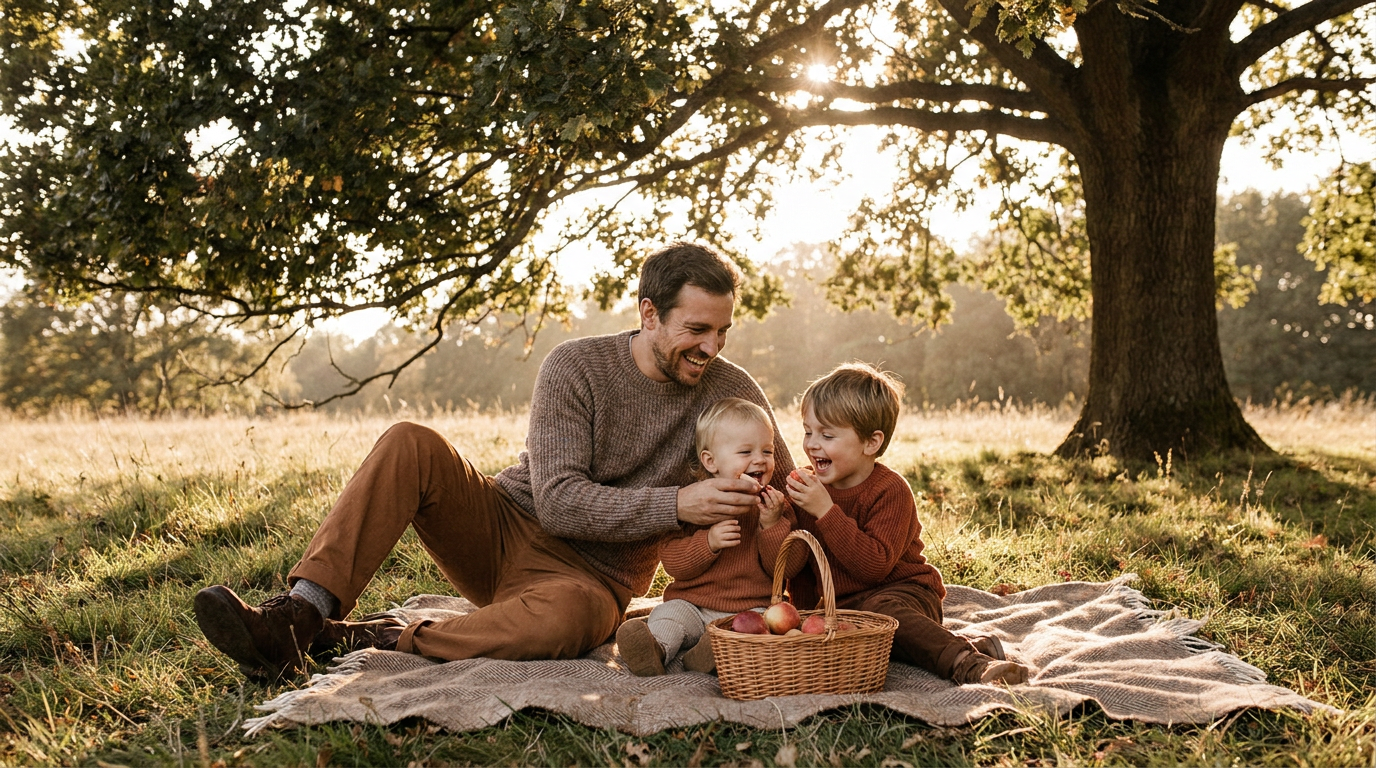
Fatherhood and the Sweet memories of Childhood - Inspired by Adeoluwatoni Ajagbe
A father helps shape the childhood his children will one day remember. Through his presence, words, habits, and affection, he becomes part of the stories they carry into adulthood. Years later, a familiar song, the smell of a favourite meal, or the sight of an old photograph may bring back a moment when being beside him made the world feel safe. Some of childhood’s sweetest memories begin in ordinary places: a walk to school, a Saturday morning at home, a conversation on the way to church. A child may remember falling asleep while a father reads, being lifted high enough to see over a crowd, or hearing him laugh at a joke that was hardly funny. What seems small to a busy adult may become precious to the child who experienced it.
FATHERHOOD AND THE SWEET MEMORIES OF CHILDHOOD Creating Beautiful Memories That Outlive Childhood
“Children are a gift from the LORD; they are a reward from him.” — Psalm 127:3 (NLT)
INTRODUCTION: THE MEMORIES THAT TIME CANNOT ERASE
Childhood is a season that passes quickly, but its memories can last a lifetime. Long after children have grown into adults, left their parents' homes, established careers, and raised families of their own, certain memories remain deeply engraved upon their hearts.
They remember the laughter around the dinner table, the warmth of a father's embrace, the excitement of family celebrations, the stories told before bedtime, and the reassuring voice that spoke courage into their fears.
They remember the father who carried them on his shoulders, held their hands while crossing the road, celebrated their small victories, and patiently taught them how to navigate life's challenges.
Sometimes, the most enduring memories are not created during expensive holidays or elaborate celebrations. They are formed in the ordinary moments of everyday life.
A father who sits beside his child to listen to a seemingly insignificant story may be creating a memory that will remain precious for decades.
A father who takes his children on an evening walk may be doing more than providing exercise; he may be building a bridge of affection that will connect their hearts throughout life.
A father who prays with his children before bedtime may be planting spiritual seeds that will continue to bear fruit long after his voice is no longer heard in the family home.
The true beauty of fatherhood is not merely in raising children who become successful adults, but in giving them a childhood worth remembering.
Every father is writing a story in the hearts of his children. The question is not whether his children will remember him, but what memories they will carry into adulthood.
1. CHILDHOOD IS A GIFT THAT FATHERS MUST TREASURE
Childhood is one of life's most delicate and beautiful seasons. It is characterized by innocence, curiosity, discovery, imagination, dependence, and an extraordinary capacity for love.
Children experience the world differently from adults. They find excitement in simple things, happiness in unexpected places, and wonder in ordinary experiences.
A puddle of water can become an ocean of adventure. A cardboard box can become a magnificent castle. A simple family picnic can become an unforgettable celebration.
Yet fathers sometimes become so preoccupied with providing for their families that they overlook the beauty of the childhood unfolding before their eyes.
They work tirelessly to secure tomorrow while unintentionally missing the precious moments of today.
There is dignity in providing for one's family. Financial responsibility is an important dimension of fatherhood. However, provision must never become a substitute for presence.
Children need food, shelter, clothing, and education, but they also need attention, affection, companionship, and emotional security.
A child may eventually forget the price of a birthday gift but remember the father who attended the birthday celebration.
A child may forget the particular toys received during childhood but remember the father who sat on the floor and played with them.
The years of childhood cannot be stored away for future use.
Once they have passed, they cannot be recovered.
A father must therefore learn to recognize that the ordinary moments of childhood are extraordinary opportunities for building lifelong memories.
2. THE FATHER AS THE ARCHITECT OF CHILDHOOD MEMORIES
Every family creates memories, whether intentionally or unintentionally.
Some memories are beautiful and comforting. Others are painful and difficult to forget.
The father plays a significant role in shaping the emotional atmosphere in which these memories are formed.
Through his words, attitudes, decisions, relationships, and daily conduct, he contributes to the experiences that children associate with their childhood.
A father who creates an atmosphere of love and acceptance helps his children associate home with security.
A father who frequently expresses anger, contempt, or rejection may leave memories that children struggle to overcome.
This does not mean that a good father must be perfect or that every childhood must be free from disappointment.
Rather, it means that fathers should become intentional about the emotional experiences they create.
A beautiful childhood is not necessarily a childhood without challenges. It is one in which children know that they are loved, protected, valued, and supported, even during difficult circumstances.
The father who apologizes after making a mistake teaches humility.
The father who comforts a disappointed child teaches compassion.
The father who celebrates effort rather than demanding perfection teaches confidence.
The father who remains present during hardship teaches loyalty.
These experiences become the emotional building blocks of childhood memories.
Fathers are not merely raising children; they are helping to shape the memories through which those children may one day interpret love, family, security, and belonging.
3. THE POWER OF A FATHER'S PRESENCE
One of the greatest gifts a father can give his children is his presence.
Presence is more than physical proximity. A father may live in the same house as his children and still remain emotionally distant.
True presence involves attention, engagement, availability, and genuine interest in the child's world.
It means listening when children speak, noticing when their emotions change, and making time for activities that matter to them.
Children do not always understand the pressures of adulthood.
They may not appreciate the complexity of financial obligations, professional responsibilities, or the sacrifices required to sustain a family.
However, they understand when their father is available.
They recognize when he listens.
They feel the joy of being noticed.
They experience the reassurance of knowing that their father considers them important.
A father who regularly spends meaningful time with his children communicates a powerful message:
You matter to me. Your happiness matters. Your thoughts are important. Your presence brings joy into my life.
Such messages become part of a child's developing sense of identity.
Years later, an adult may not remember every conversation with their father, but may remember the feeling of being loved and valued.
The greatest inheritance of childhood is sometimes not what a father leaves in his children's hands, but what he deposits in their hearts.
4. LAUGHTER: THE MUSIC OF A HAPPY CHILDHOOD
Laughter is one of the sweetest sounds in a family home.
The laughter of children running through the house, playing with their father, sharing jokes, or enjoying family games creates an atmosphere of warmth and belonging.
Fathers should never underestimate the importance of playfulness.
There is a place for discipline, responsibility, instruction, and correction, but there must also be room for joy.
A father who is always serious may unintentionally create emotional distance between himself and his children.
Children need to experience their father not only as an authority figure but also as someone whose presence brings happiness.
Play provides opportunities for connection.
Through games and recreational activities, fathers can teach patience, cooperation, resilience, honesty, and respect for others.
A simple football game in the backyard can become a lesson in teamwork.
A board game can teach children how to win graciously and lose without bitterness.
A family outing can strengthen companionship.
A humorous conversation can relieve tension after a difficult day.
The memories created through laughter often become treasured family stories.
Many years later, siblings may gather and recall the funny things their father said, the games they played, or the unusual adventures they experienced together.
Such recollections strengthen family identity and preserve emotional connections across generations.
A father should not become so consumed with the seriousness of life that his children never experience the sweetness of his laughter.
5. THE BEAUTY OF FAMILY TRADITIONS
Family traditions provide continuity, identity, and belonging.
They are repeated experiences that become part of a family's shared history.
Traditions do not need to be expensive or elaborate.
They may include Sunday family meals, birthday prayers, annual picnics, Christmas celebrations, bedtime stories, evening walks, family devotion, or special conversations during school holidays.
What makes these activities meaningful is not necessarily their financial value but their emotional significance.
Children often anticipate family traditions with excitement because they provide a sense of predictability and connection.
A father who establishes meaningful traditions is creating opportunities for memories to accumulate over time.
The annual family photograph may eventually become a treasured record of growth and change.
The Christmas gathering may become a reminder of togetherness.
The evening devotion may become a spiritual foundation that influences future generations.
The father's favourite song may later evoke memories of family journeys.
Even familiar expressions, jokes, and affectionate nicknames can become part of a family's treasured heritage.
When children grow into adulthood, they may reproduce these traditions in their own homes.
In this way, the memories of one generation become the traditions of another.
A beautiful family tradition is a gift that can continue giving long after the father who established it has grown old.
6. THE FATHER'S VOICE: WORDS THAT BECOME MEMORIES
The words spoken by a father can remain with a child for a lifetime.
Some adults still remember the encouragement they received from their fathers many decades earlier.
Others continue to struggle with painful words spoken during childhood.
This reveals the extraordinary influence of paternal communication.
A father's voice can become a source of courage or a reminder of rejection.
It can strengthen confidence or deepen insecurity.
It can inspire hope or create fear.
For this reason, fathers must become intentional about the words they speak.
Children need to hear expressions such as:
I love you. I am proud of your efforts. You are important to me. I believe in your ability to learn and grow. Making a mistake does not make you a failure. You can always talk to me. I am grateful to be your father. With God's help, you can overcome this challenge.
These statements should be supported by consistent actions.
A father should also learn to correct without humiliating, disagree without rejecting, and discipline without destroying dignity.
Children are still developing emotionally, intellectually, and socially. Their mistakes should become opportunities for instruction rather than occasions for unnecessary shame.
The father who speaks with wisdom helps create an internal reservoir of encouragement that children may draw upon during difficult seasons of adulthood.
When life becomes challenging, they may remember his reassuring words.
When they experience failure, they may recall his lessons about perseverance.
When they become parents, they may repeat the same expressions of affection to their own children.
A father's words may outlive his physical presence, continuing to speak through the memories of those he raised.
7. THE SWEET MEMORIES OF A FATHER'S AFFECTION
Affection is an essential expression of fatherhood.
Children need to know that their father loves them, but they also benefit from experiencing that love through appropriate physical affection, emotional warmth, and consistent care.
A gentle embrace, a reassuring hand on the shoulder, a smile of approval, or a comforting presence during distress can communicate love in ways that words sometimes cannot.
For younger children, being carried, hugged, and comforted may become deeply meaningful experiences.
As children grow older, expressions of affection may change, but the need for emotional connection remains.
Teenagers may no longer desire the same playful interactions they enjoyed as young children, yet they still need reassurance that their father's love has not diminished.
Affection should respect each child's temperament, comfort, and personal boundaries.
A father must learn to express love in ways that his children can receive and appreciate.
The emotional warmth of childhood can influence how individuals understand closeness, trust, and relationships later in life.
A child who consistently experiences loving and respectful affection may carry into adulthood a valuable understanding of what healthy relationships can look like.
The tenderness of a father is not a weakness of masculinity; it is one of its most beautiful expressions.
8. CREATING MEMORIES THROUGH SHARED ADVENTURES
Some of the sweetest childhood memories emerge from shared adventures.
These adventures do not necessarily require international travel or expensive recreational activities.
They may involve fishing trips, visits to grandparents, nature walks, gardening, cooking, cycling, swimming, visiting historical places, or exploring a new neighbourhood.
What matters is the opportunity for shared discovery.
Children often remember experiences that engage their curiosity and imagination.
A father who introduces his children to nature may awaken a lifelong appreciation for creation.
A father who takes his children to visit elderly relatives may teach them the importance of family history.
A father who involves his children in household projects may develop their confidence and practical abilities.
A father who travels with his children may expose them to new cultures, ideas, and perspectives.
These experiences become more meaningful when fathers participate actively rather than merely supervise.
Children want to share excitement with their fathers.
They want him to notice what they notice, celebrate what excites them, and answer the questions that arise from their discoveries.
Shared adventures also provide opportunities for spontaneous conversations that may not occur in formal family meetings.
Sometimes, a child who struggles to express emotions at home may speak freely during a walk or a long journey.
The journey may eventually be forgotten, but the connection created along the way can remain unforgettable.
9. THE SWEET MEMORIES OF SPIRITUAL FATHERHOOD
For a Christian father, one of the most meaningful legacies of childhood is the memory of a home where God was honoured.
Spiritual fatherhood extends beyond taking children to church or teaching them biblical information.
It involves demonstrating faith through everyday conduct.
Children should have opportunities to observe their father's relationship with God through prayer, integrity, compassion, forgiveness, generosity, and humility.
Deuteronomy 6:6–7 emphasizes the importance of teaching God's commandments diligently to children and discussing them throughout daily life.
This biblical instruction presents spiritual formation as an ongoing responsibility rather than an occasional religious activity.
A father can create lasting spiritual memories through family prayers, Bible stories, worship, conversations about God's faithfulness, and acts of service to others.
However, the credibility of these spiritual experiences depends greatly on the father's conduct.
Children who hear their father preach forgiveness should also see him practise forgiveness.
Those who hear him teach honesty should observe his commitment to truth.
Those who hear him speak about God's love should experience love within the home.
The most powerful spiritual memories often emerge when biblical teaching is demonstrated through practical living.
A child may remember the father who prayed during a family crisis.
Another may remember the father who expressed gratitude when resources were limited.
Another may remember the father who responded to disappointment with patience and trust in God.
These experiences can help children understand faith as a living relationship rather than merely a collection of religious obligations.
A godly father does not simply teach his children about the heavenly Father; he seeks to reflect God's love, mercy, faithfulness, and compassion in his relationship with them.
10. WHEN CHILDHOOD MEMORIES ARE FORMED DURING DIFFICULT SEASONS
Not every childhood is characterized by comfort, abundance, or uninterrupted happiness.
Some families experience financial hardship, illness, bereavement, relocation, marital difficulties, or other painful circumstances.
Yet even during difficult seasons, fathers can help create meaningful memories of courage, togetherness, resilience, and hope.
Children may not remember every detail of a financial crisis, but they may remember how their father reassured the family.
They may not fully understand the circumstances surrounding an illness, but they may remember the tenderness with which their father cared for them.
They may not appreciate the sacrifices involved in providing for the family, but they may later recognize the love behind those sacrifices.
The way a father responds to adversity can become an enduring lesson.
A father who remains compassionate during hardship teaches that love is not dependent upon prosperity.
A father who acknowledges his fears while responding responsibly teaches courage without pretending to be invulnerable.
A father who seeks help when necessary teaches wisdom and humility.
A father who maintains hope without denying reality teaches emotional resilience.
Difficult experiences should never be romanticized, especially when they involve neglect, abuse, or preventable suffering. Nevertheless, fathers can help children navigate unavoidable challenges with greater security and support.
The sweetness of childhood is not always found in the absence of storms, but sometimes in the memory of a loving father who remained a source of shelter when the storms came.
11. WHEN CHILDREN GROW UP: THE NOSTALGIA OF FATHERHOOD
There comes a time when the toys are packed away, the school uniforms are no longer needed, and the familiar sounds of childhood gradually disappear from the home.
The little child who once held his father's finger begins to walk independently.
The daughter who once ran into her father's arms becomes a young woman with responsibilities and aspirations.
The son who once asked endless questions begins to make important decisions for himself.
The father who once carried his children on his shoulders may eventually watch them carry responsibilities of their own.
These transitions are natural and necessary, yet they can awaken powerful emotions.
A father may look at an old photograph and remember a moment that seemed ordinary when it occurred.
He may discover a childhood drawing tucked inside a book.
He may hear a familiar song and remember a family journey.
He may walk past an empty bedroom and recall the laughter that once filled it.
These memories remind him that fatherhood is both a privilege and a journey through changing seasons.
The goal of fatherhood is not to keep children permanently dependent, but to prepare them for responsible adulthood while preserving the bonds of love.
As children grow older, the relationship between father and child should also mature.
The father who once provided constant direction must increasingly learn to offer wisdom, respect, encouragement, and appropriate independence.
He should celebrate his children's growth rather than resent the changes it brings.
The beauty of successful fatherhood is that children eventually grow beyond the father's constant supervision without growing beyond the assurance of his love.
12. THE MEMORIES CHILDREN CARRY INTO THEIR OWN FAMILIES
One of the most remarkable dimensions of childhood memory is its influence across generations.
Adults often draw upon their childhood experiences when deciding how to raise their own children.
They may reproduce the traditions they cherished, repeat the words that encouraged them, or recreate the family experiences that brought them happiness.
A man who remembers his father reading bedtime stories may develop the same habit with his children.
A woman who remembers her father's consistent affection may value emotional availability in family relationships.
A child who experienced meaningful family celebrations may seek to establish similar traditions in adulthood.
Not every childhood pattern should be repeated. Some adults must intentionally replace painful experiences with healthier approaches to parenting.
Nevertheless, positive memories can provide valuable examples of love, patience, responsibility, and family commitment.
The influence of a father may therefore extend far beyond the years in which he actively raises his children.
Through the memories he creates, he may indirectly shape the experiences of grandchildren and future generations.
This is one of the profound responsibilities of fatherhood.
A father is not merely creating memories for his children; he may also be helping to shape the childhood experiences of generations he will never personally meet.
13. PRACTICAL WAYS FATHERS CAN CREATE SWEET CHILDHOOD MEMORIES
Beautiful childhood memories are often the result of small actions practised consistently.
Fathers can intentionally cultivate such memories through the following habits.
1. Establish regular father-child time
Create opportunities for uninterrupted interaction with each child. The purpose is not merely to spend time together but to strengthen emotional connection.
2. Celebrate meaningful milestones
Recognize birthdays, school achievements, personal growth, acts of kindness, and important developmental transitions.
Celebrate effort, character, and perseverance rather than focusing exclusively on academic or competitive success.
3. Develop unique family traditions
Establish activities that children can anticipate and remember, such as family meals, annual outings, special prayers, or seasonal celebrations.
4. Preserve family stories
Share stories about family history, grandparents, childhood experiences, and important lessons learned.
These narratives help children develop a sense of identity and belonging.
5. Take photographs and preserve meaningful keepsakes
Photographs, handwritten notes, childhood drawings, and family videos can become treasured reminders of shared experiences.
However, documenting memories should never replace actively participating in them.
6. Encourage open conversations
Create an environment where children can discuss their fears, dreams, questions, disappointments, and achievements without unnecessary judgment.
7. Make room for laughter and play
Participate in games, recreational activities, and spontaneous moments of fun.
Allow children to experience the joyful and approachable side of fatherhood.
8. Express affection consistently
Communicate love through appropriate physical affection, encouraging words, attentive listening, and practical acts of care.
9. Be present during difficult moments
Attend important events when possible, provide comfort during disappointment, and remain emotionally available when children face challenges.
10. Create spiritual memories
Pray with children, teach biblical principles, model Christian character, and encourage a personal relationship with God without coercion.
11. Apologize and repair relationships
When mistakes occur, acknowledge them sincerely. A father's willingness to apologize can become a powerful memory of humility and reconciliation.
12. Give children the gift of an emotionally safe home
Avoid creating an atmosphere dominated by fear, humiliation, hostility, or unpredictable anger.
Let the family home become a place where children feel respected, protected, and loved.
14. WHAT WILL YOUR CHILDREN REMEMBER?
Every father should occasionally ask himself an important question:
When my children become adults and reflect upon their childhood, what will they remember about me?
Will they remember a father who was always too busy to listen?
Or will they remember a father who made time for them despite the pressures of life?
Will they remember a home filled primarily with tension and criticism?
Or will they remember a home where discipline was balanced with affection, encouragement, and forgiveness?
Will they remember a father whose love seemed dependent upon achievement?
Or will they remember a father who loved them consistently, even when they failed?
Will they remember a man who spoke frequently about God but rarely demonstrated godly character?
Or will they remember a father whose humility, compassion, integrity, and faith made the love of God more understandable?
These questions are not intended to condemn fathers who have made mistakes.
No father can create a perfect childhood.
Every family experiences disappointments, misunderstandings, and missed opportunities.
What matters is the willingness to grow, repair relationships, and become more intentional.
A father who recognizes that he has been emotionally distant can begin creating new experiences of connection.
A father who has been excessively critical can learn to speak with greater kindness.
A father who has neglected family traditions can begin establishing them.
Even when children are already adults, opportunities remain for meaningful conversations, shared experiences, forgiveness, and reconciliation.
The past cannot be rewritten, but the present can become the beginning of a better chapter.
The most important time to begin creating beautiful family memories is not someday in the future. It is today.
15. THE LASTING LEGACY OF A FATHER'S LOVE
As the years pass, many things that once appeared important gradually lose their significance.
Possessions become outdated.
Houses change ownership.
Professional achievements become historical records.
Financial circumstances fluctuate.
Yet the influence of genuine love can endure across generations.
A father may leave his children an inheritance of material possessions, but he should also aspire to leave them an inheritance of beautiful memories.
Let them remember his kindness.
Let them remember his patience.
Let them remember his laughter.
Let them remember his faith.
Let them remember his wisdom.
Let them remember the way he treated their mother and other members of the family with dignity and respect.
Let them remember that he listened when they spoke, encouraged them when they struggled, and celebrated them when they succeeded.
Let them remember a father who was strong enough to protect, humble enough to apologize, wise enough to guide, and loving enough to embrace.
And when the years of childhood have passed, let those memories remain as reminders that they were deeply loved.
A father may not be able to give his children everything they desire, but he can strive to give them something of enduring value: the experience of being cherished.
CONCLUSION: GIVE YOUR CHILDREN A CHILDHOOD WORTH REMEMBERING
Fatherhood is a journey of love expressed through time.
The days may sometimes appear long, but the years of childhood pass with remarkable speed.
There will come a day when the little hands no longer reach upward to be carried.
There will come a day when bedtime stories give way to adult conversations.
There will come a day when school runs, playground visits, and childhood celebrations become treasured recollections.
The father who understands the value of these fleeting seasons will not postpone affection until tomorrow.
He will recognize that every embrace, every conversation, every shared meal, every prayer, and every moment of laughter is an opportunity to create a lasting memory.
The greatest gift a father can give his children is not a childhood without challenges, but a childhood enriched by love, security, joy, guidance, and meaningful relationships.
Let fatherhood become more than the fulfilment of responsibilities.
Let it become the creation of a beautiful heritage.
Let the family home become a place where memories are made, love is demonstrated, faith is nurtured, and character is developed.
And when the children have grown, when the family photographs have faded, and when the familiar sounds of childhood have become distant echoes, may they look back with gratitude and say:
My father was not a perfect man, but he loved us.
He made time for us.
He laughed with us, prayed with us, corrected us, encouraged us, and believed in us.
He gave us more than a place to live; he gave us a place to belong.
He gave us more than material possessions; he gave us memories that money could never purchase.
He gave us more than instructions for life; he gave us an example of love.
For in the end, one of the greatest achievements of fatherhood is to raise children who can look back upon their childhood with gratitude, remember their father with affection, and carry the beauty of his love into the generations that follow.
FINAL THOUGHT The Greatest Treasures of Childhood
A child may forget the toys a father bought,
But remember the games they played together.
A child may forget the clothes a father provided,
But remember the warmth of his embrace.
A child may forget the places they visited,
But remember the joy of travelling together.
A child may forget the meals upon the table,
But remember the laughter that surrounded them.
A child may forget many of the father's instructions,
But remember the example of the life he lived.
A child may forget the value of his father's possessions,
But remember the immeasurable value of his presence.
For the sweetest memories of childhood are not always found in the things a father gives, but in the love a father lives.