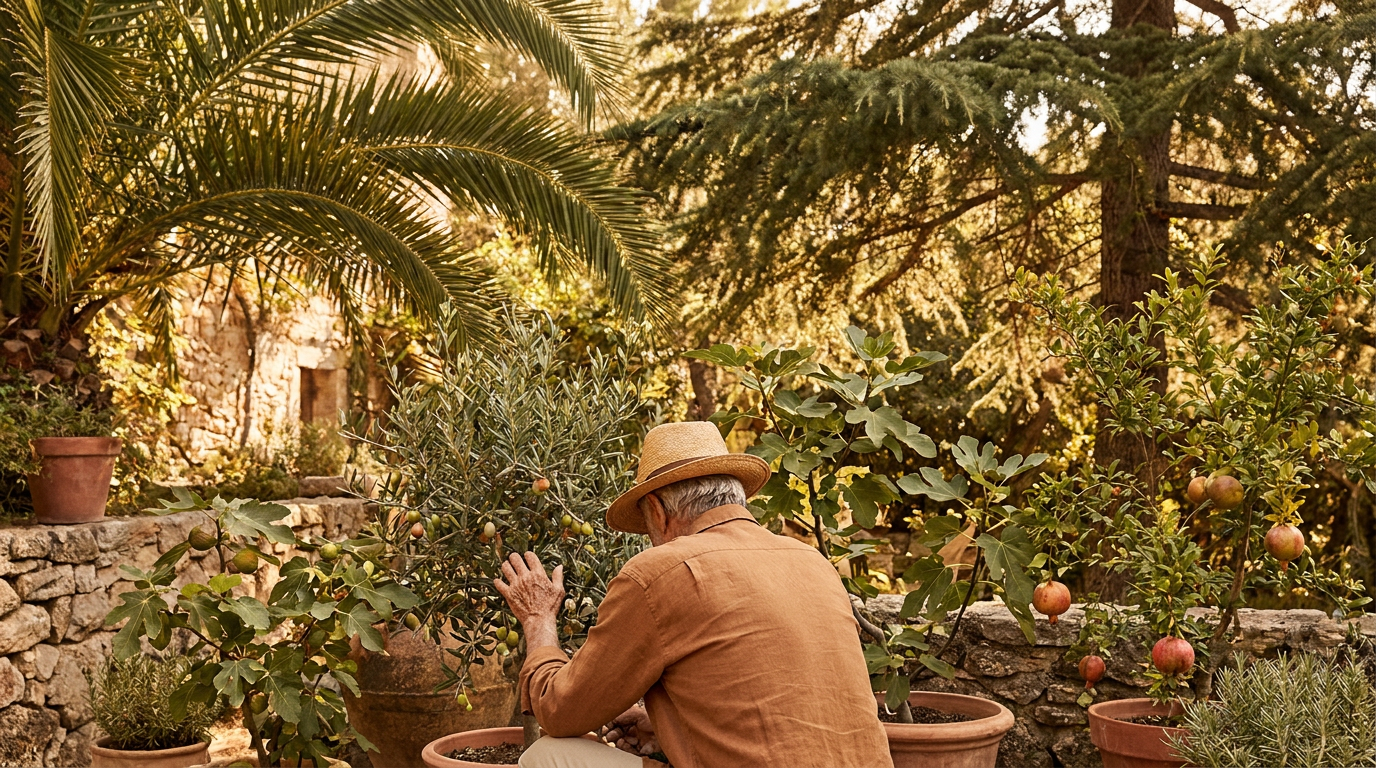
Flourishing - Part 1
Flourishing refers to a state of optimal human functioning, growth, and overall well-being. Rather than simply the absence of mental illness, flourishing represents experiencing high levels of both mental/emotional health and positive life satisfaction.The PERMA Model of Flourishing
Topic - FLOURISHING — LIVING A FRUITFUL, PURPOSEFUL, AND ABUNDANT LIFE IN GOD.
A Biblical Perspective on Spiritual Growth, Fruitfulness, Prosperity, and Divine Fulfillment
Key Scripture: Psalm 92:12–14 (KJV)
“The righteous shall flourish like the palm tree: he shall grow like a cedar in Lebanon.
Those that be planted in the house of the LORD shall flourish in the courts of our God.
They shall still bring forth fruit in old age; they shall be fat and flourishing.”
INTRODUCTION: GOD'S DESIGN FOR FLOURISHING
Flourishing is more than surviving. It is more than achieving material prosperity, accumulating wealth, or attaining social recognition. True flourishing is the progressive manifestation of God's life, character, wisdom, grace, and purpose in the life of a believer.
God never intended His children merely to exist. His desire is that they grow, mature, become fruitful, and fulfill their divine assignments.
Flourishing describes a life that is rooted in God, sustained by His grace, nourished by His Word, strengthened by His Spirit, and productive in every season.
It is possible to be successful without flourishing. A person may possess wealth but lack peace, attain influence but lack integrity, or achieve professional excellence while experiencing spiritual emptiness.
Biblical flourishing embraces the whole person: spirit, soul, body, relationships, character, calling, and eternal destiny.
Jesus declared in John 10:10:
“I am come that they might have life, and that they might have it more abundantly.”
This abundant life is not a promise of uninterrupted comfort or material wealth. It is the fullness of life found in Christ, expressed through fellowship with God, spiritual maturity, enduring hope, fruitful service, and the fulfillment of divine purpose.
Flourishing is not simply having more; it is becoming more of what God created us to be.
1. FLOURISHING BEGINS WITH BEING PLANTED IN GOD
Psalm 92:13
“Those that be planted in the house of the LORD shall flourish in the courts of our God.”
Every flourishing life begins with the right foundation.
A tree cannot flourish without roots, and a believer cannot flourish spiritually without a living relationship with God.
The strength of a tree is determined not merely by the beauty of its branches but by the depth and health of its roots.
Similarly, the spiritual strength of a Christian is determined by the depth of communion with God.
Being planted in God involves abiding in Christ, studying His Word, cultivating prayer, walking in obedience, maintaining fellowship with other believers, and remaining sensitive to the Holy Spirit.
The Difference Between Being Planted and Being Present
A person may be present in a church without being deeply rooted in Christ.
Being present describes physical attendance; being planted describes spiritual commitment, belonging, and growth.
A planted believer develops spiritual stability, conviction, endurance, and fruitfulness.
The storms of life may shake the branches, but deep roots provide stability.
Spiritual flourishing is sustained by spiritual rootedness.
Colossians 2:6–7 encourages believers to walk in Christ, rooted and built up in Him, established in the faith.
The deeper our roots grow in Christ, the stronger our capacity becomes to withstand adversity and bear lasting fruit.
2. FLOURISHING LIKE THE PALM TREE
Psalm 92:12
“The righteous shall flourish like the palm tree.”
The palm tree provides a powerful biblical metaphor for flourishing.
Palm trees are associated with resilience, fruitfulness, usefulness, and the ability to grow in demanding environments.
A. Flourishing Despite Difficult Circumstances
Many palm species grow in hot, dry environments where other plants struggle.
Likewise, believers are called to remain spiritually fruitful even when circumstances are unfavourable.
Flourishing does not require a perfect environment.
Joseph flourished in Egypt despite betrayal, slavery, and imprisonment.
Daniel maintained spiritual excellence in Babylon despite living in a culture that frequently challenged his convictions.
Paul demonstrated spiritual fruitfulness even during imprisonment.
Their circumstances did not determine the ultimate quality of their relationship with God.
A flourishing believer is not defined by the absence of adversity but by the sustaining presence of God.
B. Flourishing Through Resilience
Palm trees demonstrate remarkable flexibility under environmental stress.
Similarly, spiritual resilience enables believers to endure disappointment without abandoning faith, experience setbacks without surrendering hope, and face opposition without compromising character.
Resilience is not the denial of pain. It is the ability to persevere through suffering while trusting God's faithfulness.
C. Flourishing Through Fruitfulness
The date palm produces nourishing fruit and provides numerous practical benefits.
Likewise, the life of a flourishing believer should benefit others.
Our spiritual growth should produce kindness, generosity, wisdom, compassion, integrity, encouragement, and service.
A flourishing Christian becomes a blessing to family, community, church, and society.
3. FLOURISHING LIKE THE CEDAR OF LEBANON
Psalm 92:12
“He shall grow like a cedar in Lebanon.”
The cedar represents strength, dignity, durability, and sustained growth.
Where the palm tree illustrates resilience and fruitfulness, the cedar provides an image of stability and maturity.
Spiritual Strength
Flourishing requires the development of spiritual strength.
Ephesians 3:16 speaks of being strengthened with might by God's Spirit in the inner person.
This strength is cultivated through prayer, obedience, spiritual discipline, and dependence upon God.
Spiritual Maturity
A flourishing Christian must continually progress toward Christlike maturity.
Ephesians 4:13 describes the goal of attaining maturity measured by the fullness of Christ.
Spiritual maturity is reflected in the transformation of character, the exercise of wisdom, and the ability to respond to life's challenges with faith and godliness.
Spiritual Stability
Mature believers are not easily destabilized by every new teaching, emotional disappointment, or cultural influence.
Their convictions are grounded in Scripture, and their identity is established in Christ.
God desires believers who are fruitful like the palm tree and established like the cedar.
4. FLOURISHING THROUGH THE WORD OF GOD
Psalm 1:2–3
“But his delight is in the law of the LORD; and in his law doth he meditate day and night.
And he shall be like a tree planted by the rivers of water, that bringeth forth his fruit in his season; his leaf also shall not wither; and whatsoever he doeth shall prosper.”
The Word of God is essential nourishment for spiritual flourishing.
Just as plants require water and nutrients, believers require the continual influence of divine truth.
The Word renews the mind, strengthens faith, provides direction, corrects destructive behavior, and reveals God's character.
The Importance of Meditation
Meditation involves deliberately reflecting upon God's Word and allowing its truth to shape our thinking, decisions, and conduct.
A flourishing believer does not merely read Scripture for information but receives it for transformation.
Joshua 1:8 connects meditation on God's Word with obedience and wise, fruitful living.
The purpose of biblical meditation is not simply to accumulate knowledge but to develop a life aligned with God's will.
A mind nourished by divine truth becomes fertile ground for godly character and purposeful living.
5. FLOURISHING THROUGH THE HOLY SPIRIT
Galatians 5:22–23
“But the fruit of the Spirit is love, joy, peace, long suffering, gentleness, goodness, faith, meekness, temperance: against such there is no law.”
The Holy Spirit is central to Christian flourishing.
Without the transforming work of the Spirit, outward achievements may coexist with inward spiritual poverty.
The Holy Spirit cultivates Christlike character within believers.
The evidence of spiritual flourishing is therefore not limited to spiritual gifts, visible ministry, material resources, or public recognition.
It is also revealed through the fruit of the Spirit.
Love transforms relationships.
Joy provides strength beyond circumstances.
Peace sustains the heart amid uncertainty.
Patience enables perseverance.
Kindness and goodness enrich human relationships.
Faithfulness establishes reliability.
Gentleness moderates strength.
Self-control protects character and destiny.
These qualities are the beautiful fruits of a life surrendered to the Holy Spirit.
The greatest evidence of flourishing is not what we possess but who we are becoming in Christ.
6. FLOURISHING THROUGH ABIDING IN CHRIST
John 15:5
“I am the vine, ye are the branches: He that abideth in me, and I in him, the same bringeth forth much fruit: for without me ye can do nothing.”
Jesus presents one of Scripture's most profound illustrations of spiritual fruitfulness.
The branch does not manufacture life independently. It receives nourishment from the vine.
Likewise, Christian flourishing is sustained through continuous dependence upon Christ.
The Progression of Fruitfulness
In John 15, Jesus speaks of bearing fruit, bearing more fruit, and bearing much fruit.
This reveals God's desire for increasing spiritual productivity.
The Christian life should demonstrate progressive growth in character, faith, love, wisdom, service, and spiritual influence.
However, greater fruitfulness sometimes requires pruning.
Pruning may involve the removal of unhealthy habits, destructive relationships, pride, misplaced priorities, or activities that hinder spiritual growth.
God's discipline and refining work may be uncomfortable, but His purpose is our maturity and holiness.
Flourishing sometimes requires surrendering what is good to embrace what is spiritually necessary.
7. FLOURISHING IN EVERY SEASON OF LIFE
Psalm 92:14
“They shall still bring forth fruit in old age; they shall be fat and flourishing.”
One of the most encouraging dimensions of biblical flourishing is that fruitfulness is not restricted to youth.
God's purpose extends across the seasons of human life.
Flourishing in Youth
Youth provides opportunities for learning, developing character, acquiring wisdom, discovering purpose, and establishing spiritual foundations.
Ecclesiastes 12:1 encourages young people to remember their Creator in the days of their youth.
Flourishing in Adulthood
Adulthood often involves responsibilities relating to marriage, parenting, career, leadership, ministry, and community service.
Flourishing during this season requires balancing responsibilities with spiritual priorities.
It involves growing in wisdom while faithfully stewarding the opportunities God provides.
Flourishing in Old Age
Old age is not necessarily the conclusion of fruitfulness.
Although physical abilities may change, older believers can continue to contribute through prayer, mentorship, encouragement, wisdom, teaching, and the transmission of godly values.
Moses, Caleb, and Anna demonstrate different dimensions of faithfulness and purpose in later life.
The value of a person's life is not determined by physical strength alone.
In God's kingdom, every season of life can become a season of meaningful fruitfulness.
8. FLOURISHING IN ADVERSITY
Jeremiah 17:7–8
“Blessed is the man that trusteth in the LORD, and whose hope the LORD is.
For he shall be as a tree planted by the waters, and that spreadeth out her roots by the river, and shall not see when heat cometh, but her leaf shall be green; and shall not be careful in the year of drought, neither shall cease from yielding fruit.”
This passage reveals a remarkable spiritual principle:
Flourishing is not dependent upon favorable external conditions.
The tree experiences heat and drought, yet its roots draw nourishment from a dependable source.
Similarly, believers may encounter financial challenges, bereavement, illness, disappointment, rejection, or seasons of uncertainty.
Faith does not guarantee immunity from these experiences.
However, our relationship with God provides spiritual resources for endurance, hope, and continued growth.
The apostle Paul illustrates this truth in Philippians 4:11–13, where he describes learning contentment in circumstances of both abundance and need.
Flourishing in adversity involves maintaining faith without denying suffering, seeking wisdom without surrendering hope, and remaining open to God's sustaining grace.
Sometimes the greatest spiritual growth occurs in seasons that appear outwardly unproductive.
Roots often deepen before branches expand.
9. FLOURISHING IN RELATIONSHIPS
True flourishing is never entirely individualistic.
God created human beings for relationship with Himself and with one another.
A spiritually flourishing person should increasingly demonstrate the capacity to love, forgive, encourage, support, and serve others.
Flourishing in Marriage
A flourishing marriage requires mutual respect, faithfulness, communication, sacrifice, forgiveness, and shared commitment.
Flourishing in Fatherhood and Motherhood
Parents flourish not merely by providing material resources but by nurturing the spiritual, emotional, moral, and intellectual development of their children.
A flourishing father becomes a source of wisdom, encouragement, security, guidance, and godly example.
A flourishing mother contributes love, nurture, wisdom, strength, and stability to family life.
Flourishing in Community
Believers flourish as they participate in meaningful fellowship, support the vulnerable, pursue justice, and contribute positively to society.
Proverbs 11:25 teaches the principle that generosity brings blessing.
The flourishing life is therefore not merely a life that receives but one that gives.
We flourish most meaningfully when our growth becomes a source of blessing to others.
10. FLOURISHING THROUGH PURPOSEFUL LIVING
Ephesians 2:10
“For we are his workmanship, created in Christ Jesus unto good works, which God hath before ordained that we should walk in them.”
Every believer has a responsibility to steward the life, gifts, opportunities, and resources entrusted to them.
Flourishing involves discovering and faithfully pursuing God's purposes.
A life of purpose is not necessarily a life of fame.
Many of the most significant contributions to humanity occur through ordinary acts of faithfulness.
A parent raising children with love and wisdom, a teacher nurturing young minds, a healthcare professional caring compassionately for patients, or a believer quietly serving the vulnerable may all demonstrate meaningful flourishing.
Purpose is expressed through faithful stewardship rather than public recognition alone.
The question is not simply, How much have I achieved?
It is also, How faithfully have I used what God entrusted to me?
11. FLOURISHING THROUGH RIGHTEOUSNESS
Proverbs 11:28
“He that trusteth in his riches shall fall: but the righteous shall flourish as a branch.”
Scripture establishes a connection between righteousness and flourishing.
Righteousness involves living in right relationship with God and allowing His character to influence our conduct.
It is reflected in integrity, truthfulness, justice, compassion, humility, and obedience.
Material prosperity without righteousness can produce moral compromise and spiritual emptiness.
A person may accumulate possessions while losing the very values that give life meaning.
Biblical flourishing places character above possessions and faithfulness above popularity.
This does not mean that righteous people will always experience material success or that hardship indicates unrighteousness.
Rather, righteousness establishes the moral and spiritual foundation for a life pleasing to God.
Flourishing without righteousness is merely outward expansion without inward transformation.
12. FLOURISHING THROUGH GENEROSITY
2 Corinthians 9:8
“And God is able to make all grace abound toward you; that ye, always having all sufficiency in all things, may abound to every good work.”
God's blessings are not intended merely for personal accumulation.
They create opportunities for service, generosity, and good works.
A flourishing life recognizes that time, wisdom, influence, finances, and abilities are resources to be stewarded responsibly.
Generosity extends beyond money.
It includes giving encouragement to the discouraged, companionship to the lonely, guidance to the inexperienced, compassion to the suffering, and opportunities to the disadvantaged.
A person may possess limited financial resources yet demonstrate extraordinary spiritual generosity.
The value of generosity is measured not simply by the amount given but by the love and faithfulness motivating the gift.
13. FLOURISHING THROUGH SPIRITUAL DISCIPLINE
1 Timothy 4:7–8
Paul encourages believers to train themselves in godliness, emphasizing the enduring value of spiritual discipline.
Flourishing requires intentional cultivation.
Just as physical health benefits from appropriate nutrition, exercise, rest, and healthy habits, spiritual growth benefits from consistent practices that deepen our relationship with God.
These include prayer, Scripture meditation, worship, fasting where appropriate, fellowship, service, and personal reflection.
Spiritual disciplines are not methods of earning God's love.
They are practices through which believers respond to His grace and cultivate attentiveness to His presence.
Consistency is often more important than intensity.
A flourishing spiritual life is developed through faithful daily choices.
Spiritual maturity is not accidental; it is cultivated through grace-enabled discipline.
14. FLOURISHING THROUGH DIVINE WISDOM
Proverbs 3:13
“Happy is the man that findeth wisdom, and the man that getteth understanding.”
Wisdom is essential to flourishing because it enables believers to make decisions consistent with God's truth.
Knowledge provides information, but wisdom guides its appropriate application.
Wisdom influences how we manage relationships, finances, time, responsibilities, emotions, and opportunities.
A flourishing believer learns to distinguish between what is permissible and what is beneficial, between immediate gratification and lasting value, and between worldly recognition and eternal significance.
James 1:5 encourages believers to ask God for wisdom.
The flourishing life is therefore characterized by a continual willingness to learn, receive correction, and grow in understanding.
15. FLOURISHING AS A TESTIMONY TO GOD'S FAITHFULNESS
Psalm 92:14–15
“They shall still bring forth fruit in old age; they shall be fat and flourishing;
To shew that the LORD is upright: he is my rock, and there is no unrighteousness in him.”
The ultimate purpose of biblical flourishing extends beyond personal satisfaction.
It is to reveal the faithfulness and righteousness of God.
Our growth should direct attention toward His goodness.
Our perseverance should testify to His sustaining grace.
Our character should reflect His holiness.
Our generosity should demonstrate His love.
Our hope should reveal confidence in His promises.
The flourishing believer becomes a living testimony that God's grace is sufficient for every season of life.
This testimony does not require a life free from suffering.
Indeed, faithfulness amid hardship may provide one of the most compelling demonstrations of trust in God.
THE SEVEN DIMENSIONS OF BIBLICAL FLOURISHING
| Dimension | Biblical Foundation Expression of Flourishing |
| Spiritual flourishing | John 15:5 Deep communion with God and spiritual fruitfulness |
| Character flourishing | Galatians 5:22–23 Growth in love, integrity, patience, and self-control |
| Mental and emotional flourishing | Philippians 4:6–9 Renewed thinking, enduring hope, and growing emotional maturity |
| Relational flourishing | Colossians 3:12–14 Healthy relationships, forgiveness, compassion, and unity |
| Physical stewardship | 1 Corinthians 6:19–20 Responsible care of the body within personal circumstances |
| Vocational flourishing | Colossians 3:23 Diligence, excellence, integrity, and purposeful work |
| Generational flourishing | Psalm 78:4–7 Passing faith, wisdom, values, and godly influence to future generations |
These dimensions are interconnected.
Spiritual maturity should influence character, relationships, decisions, and stewardship.
Nevertheless, flourishing does not mean achieving perfection in every area. It means continually growing in faithfulness to God within the realities and limitations of human life.
TEN BIBLICAL PRINCIPLES FOR A FLOURISHING LIFE
1) Be rooted in Christ. A flourishing life begins with an enduring relationship with God (Colossians 2:6–7).
2) Remain nourished by God's Word. Divine truth provides wisdom and direction (Psalm 1:2–3).
3) Depend upon the Holy Spirit. Spiritual fruitfulness flows from His transforming work (Galatians 5:22–23).
4) Cultivate righteousness. Integrity and obedience establish godly character (Proverbs 11:28).
5) Embrace spiritual growth. Continue progressing toward Christlike maturity (Ephesians 4:13).
6) Persevere through adversity. Remain rooted in God's faithfulness during difficult seasons (Jeremiah 17:7–8).
7) Develop meaningful relationships. Express God's love through compassion, forgiveness, and service (Colossians 3:12–14).
8) Live purposefully. Faithfully steward your gifts, abilities, and opportunities (Ephesians 2:10).
9) Remain fruitful throughout life. Recognize that every season offers opportunities for service (Psalm 92:14).
10) Glorify God through your life. Let your fruitfulness testify to His goodness (John 15:8).
CONCLUSION: FROM SURVIVING TO FLOURISHING
Flourishing is one of the beautiful expressions of God's transforming work in the human life.
The palm tree teaches resilience.
The cedar teaches strength.
The tree planted beside the waters teaches spiritual nourishment.
The vine and its branches teach dependence upon Christ.
The fruitful tree in old age teaches enduring purpose.
Together, these biblical images reveal that flourishing is not merely a destination but a lifelong journey of becoming increasingly rooted, established, mature, and fruitful in God.
A flourishing life is not necessarily the wealthiest, most celebrated, or most comfortable life.
It is a life increasingly conformed to Christ, sustained by divine grace, guided by godly wisdom, and devoted to meaningful service.
The greatest tragedy is not necessarily to experience hardship, disappointment, or material limitations. It is to live without discovering the transforming power of a relationship with God and the purpose for which He created us.
God calls His children beyond mere existence into spiritual vitality, beyond stagnation into growth, beyond selfish ambition into purposeful service, and beyond temporary achievements into eternal significance.
The righteous flourish because their lives are rooted in the everlasting God.
Their strength comes from Him.
Their nourishment comes from Him.
Their fruitfulness is sustained by Him.
And ultimately, their lives bring glory to Him.
A FINAL THOUGHT
Flourishing is not measured by how high we rise above others, but by how deeply we are rooted in God, how faithfully we grow in Christ, how abundantly we bear the fruit of the Spirit, and how generously our lives become a blessing to others.
May we flourish like the palm tree, grow strong like the cedar of Lebanon, remain fruitful like the tree planted by rivers of water, and abide continually in Christ, the true Vine.
For the highest expression of flourishing is a life that reflects the character of Christ and fulfils the purposes of God.